As Australia pushes toward its ambitious target of a 62–70% reduction in emissions by 2035, the national landscape is undergoing a profound transformation. This shift is not merely occurring in our energy grids or industrial sectors; it has reached the very heart of our tertiary education system. For students in 2026, pursuing a career in engineering now means mastering a hybrid of technical prowess and environmental stewardship.
Key Takeaways
- National Targets: Australia is aiming for a massive emissions reduction by 2035, creating a surge in demand for “Green” engineers.
- Market Growth: The Australian green building market is projected to reach significant heights by 2034, growing at a CAGR of nearly 5%.
- Educational Shift: Leading institutions are integrating “Net Zero” modules into core engineering curricula.
- Technical Complexity: The integration of AI and IoT in green energy systems has increased the technical difficulty of university assessments.
- Economic Opportunity: Over $97 billion in private sector investment has been driven into decarbonisation since 2022.
The Data-Driven Reality of Australia’s Green Shift
The transition to a sustainable economy is no longer a theoretical goal; it is a multi-billion dollar reality. Recent data indicates that renewables penetration in the National Electricity Market (NEM) reached a record 40% in the first half of last year. For an engineering student, this translates to a curriculum that is increasingly heavy on data science, lifecycle analysis, and carbon accounting.
The “Net Zero” Curriculum Challenge
In 2026, major universities in Sydney, Melbourne, and Brisbane have hit major milestones in their “Net Zero” operational targets. This commitment trickles down into the classroom. Students are no longer just solving for “load and stress” in civil engineering; they are solving for “embodied carbon” and “thermal efficiency.”
| Sector | Projected Growth (CAGR) | Key Technology Focus |
| Renewable Energy | 17.8% (through 2033) | Solar PV, Utility-scale Batteries, Hydrogen |
| Green Building | 4.94% (through 2034) | Fossil-fuel-free communities, Biosolar roofs |
| Sustainability Tech | 20.70% (Global Avg) | AI-driven energy management, Carbon capture |
With these rising standards, students often find themselves at a crossroads. The technical demands of a Bachelor of Engineering (Honours) require a level of precision that leaves little room for error. Consequently, many Australian students are turning to a reliable assignment writing service to bridge the gap between complex theory and the high-quality technical reporting required by top-tier universities.
Case Study: The “Biosolar” Breakthrough at Bradfield City
To understand the practical application of green engineering, we look at Bradfield City, Australia’s first new city in 100 years.
The Challenge: How to reduce the “Urban Heat Island” effect in Western Sydney while simultaneously generating renewable energy.
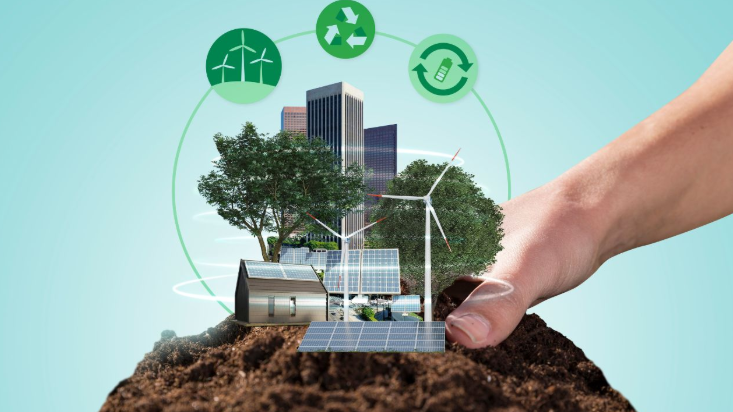
The Solution: Researchers implemented “Biosolar” technology—a system that integrates living green roofs with solar panels. Unlike traditional setups, the vegetation actually helps regulate the temperature of the panels above them.
The Results (2025 Data):
- Energy Efficiency: The cooling effect of the plants increased solar panel output by up to 107% during peak periods.
- Temperature Reduction: Surface temperatures on the roof were cut by nearly 10°C.
- Water Management: Stormwater runoff was reduced by 60%, easing the strain on urban drainage systems.
For students, this case study is a prime example of the “interdisciplinary” assignments they now face. Writing a report on such a project requires knowledge of botany, thermodynamics, and civil engineering. When the complexity becomes too great, seeking engineering assignment help ensures that these multifaceted data points are correctly interpreted and presented.
The Academic Burden: Why Students Seek Support
Despite the excitement surrounding green tech, the academic pressure in Australia is immense. Entry ranks (ATAR) for Renewable Energy Engineering at universities like UNSW remain high (92.0+), and the failure rate in complex units like Fluid Mechanics or Advanced Thermodynamics remains a concern for many.
1. Technical Precision
Green engineering assignments often involve software like MATLAB or AutoCAD to simulate energy flows. A single error in a calculation can invalidate an entire project. This is where specialised academic support becomes invaluable, providing students with a “second pair of expert eyes.”
2. Regulatory Compliance
Assignments now require students to reference the National Construction Code (NCC) and Green Star rating systems. Keeping up with these frequently updated Australian standards is a full-time job in itself.
3. Time Scarcity
With many Australian students working part-time to manage the cost of living, dedicated hours for deep research are scarce. Professional academic services provide the structure and research foundation needed to meet tight deadlines without sacrificing quality.
See also: The Hidden Costs of Technological Advancement
Frequently Asked Questions (FAQs)
1. What are the best universities for Green Engineering in Australia?
Institutions like UNSW, UTS, and the University of Queensland (UQ) currently lead the rankings for renewable energy and sustainable engineering programs.
2. Why is professional academic assistance becoming more common?
As curricula evolve to include “Net Zero” targets and complex environmental data, the difficulty level of assignments has surged. Students use these services to ensure technical accuracy and to learn proper report-writing structures.
3. Is there a demand for green engineers in Australia?
Absolutely. With over $70 billion in government-committed funding for decarbonisation, engineers with sustainability expertise are among the most sought-after professionals in the country.
4. How do I ensure my assignment meets Australian standards?
Ensure your work references the latest National Construction Code (NCC) and utilizes Australian English. If you are unsure, using an expert service familiar with the Australian education system is highly recommended.
Conclusion
The road to a sustainable Australia is paved with complex calculations and innovative designs. For the students navigating this journey, the challenges are great, but the resources—both technological and academic—are more accessible than ever. By combining rigorous study with expert support, the next generation of Australian engineers will be well-equipped to build a cleaner, greener world.
Author Bio
I am a senior academic consultant and technical writer at MyAssignmentHelp, where I specialise in bridging the gap between complex engineering theories and practical, sustainable applications. Having worked closely with Australian university students for over a decade, I’ve seen firsthand how the “Green Revolution” has transformed the engineering curriculum. My goal is to empower the next generation of innovators by providing the research tools and academic support they need to tackle Australia’s most pressing environmental challenges.