Advanced Adsorption Chiller Systems for Cooling

Advanced Adsorption Chiller Systems for Cooling

Rising Need for Sustainable Cooling Technologies

Industries and commercial facilities are under increasing pressure to adopt energy efficient and environmentally responsible cooling solutions. Conventional vapor compression systems consume significant electrical power and depend on synthetic refrigerants. As energy costs rise and environmental standards become stricter, organizations are exploring alternative technologies that offer long term operational and ecological benefits.

One of the most promising solutions in this transition is the adoption of advanced Adsorption Chillers. These systems operate using thermal energy rather than relying primarily on electricity driven compressors. By utilizing available heat sources such as waste heat, solar thermal energy, or hot water streams, adsorption chillers provide an effective and sustainable cooling mechanism.

Thermally driven cooling technology aligns with global efforts to reduce carbon emissions and improve energy efficiency. By converting unused thermal energy into chilled water, facilities can optimize overall energy utilization and lower operational costs. This approach strengthens energy management strategies and supports compliance with sustainability objectives.

Working Principle of Adsorption Cooling Systems

Adsorption chillers function on a solid sorption refrigeration cycle that uses an adsorbent material and a refrigerant, typically water. The process involves two primary phases known as adsorption and desorption. These phases occur alternately in separate chambers to ensure continuous cooling output.

During the adsorption phase, the adsorbent material captures refrigerant vapor at low pressure. This absorption of vapor creates a cooling effect in the evaporator, where chilled water is produced. In the desorption phase, heat is applied to the saturated adsorbent bed, causing the refrigerant to release as vapor. The vapor then condenses and returns to the evaporator, continuing the cycle.

The absence of mechanical compressors significantly reduces energy consumption. Instead of electrical compression, the system relies on thermal energy input to drive the refrigeration cycle. This design reduces mechanical complexity and enhances system durability.

Advanced adsorption systems are engineered with multiple adsorption beds operating alternately. While one bed undergoes adsorption, the other regenerates through heat input. This continuous switching ensures stable cooling performance without interruption.

READ ALSO  Navigating the Future of Sustainable Infrastructure in Australia

Core Components of an Adsorption Chiller

An adsorption chiller includes several interconnected components that enable efficient operation. The adsorption beds contain materials such as silica gel or zeolite that provide high surface area for vapor capture. The evaporator generates chilled water by facilitating refrigerant evaporation under low pressure conditions.

The condenser allows refrigerant vapor to condense into liquid form, completing the refrigeration loop. Heat exchangers manage the transfer of thermal energy during adsorption and desorption cycles. Pumps and control valves regulate fluid movement and maintain proper pressure levels within the system.

Modern control systems coordinate the timing of adsorption and regeneration cycles. These automated controls optimize performance and enhance overall efficiency.

Advantages of Adsorption Chillers in Industrial Applications

Adsorption chillers offer multiple advantages that make them suitable for diverse industrial and commercial environments. Their primary benefit is the ability to utilize low grade heat sources. Instead of depending entirely on electricity, these systems convert thermal energy into useful cooling output.

Additional advantages include:

• Reduced electrical consumption and lower peak demand
• Environmentally responsible operation using water as refrigerant
• Quiet functioning due to minimal moving components
• Extended equipment life with reduced mechanical wear

These benefits contribute to improved sustainability and operational savings. Facilities that produce excess heat can harness it effectively, increasing overall energy efficiency.

Role of Adsorption Chiller Manufacturers in Innovation

Technological advancement in adsorption cooling has been driven by experienced Adsorption Chiller Manufacturers. These manufacturers focus on enhancing adsorption material performance, optimizing heat exchanger efficiency, and integrating intelligent control systems.

Research and development efforts aim to improve adsorption capacity and thermal conductivity of adsorbent materials. Enhanced materials allow faster adsorption and desorption cycles, increasing cooling output and system responsiveness.

Manufacturers also design modular systems to accommodate varying cooling loads. Scalable configurations enable facilities to expand capacity without major infrastructure changes. This flexibility supports long term growth and adaptability.

READ ALSO  Common Mistakes Students Make in a Quantitative Research Proposal

Quality engineering and rigorous testing ensure consistent performance under different operating conditions. Reliable manufacturing standards strengthen durability and maintain high efficiency over extended operational periods.

Customization and System Integration

Adsorption chiller manufacturers provide tailored solutions based on specific project requirements. Factors such as available heat source temperature, cooling load profile, and installation space influence system design.

Integration with existing HVAC infrastructure requires careful planning. Proper piping, insulation, and control synchronization ensure seamless operation. Advanced control panels allow real time monitoring of temperature, pressure, and cycle timing.

Customization enhances compatibility with renewable energy systems and combined heat and power plants. This integrated approach maximizes energy utilization and supports sustainability objectives.

See also: performance review of businesses

Energy Optimization and Environmental Benefits

Adsorption chillers contribute significantly to energy optimization strategies. By leveraging waste heat or renewable sources, facilities reduce dependency on grid electricity. Lower electrical consumption decreases operational costs and mitigates exposure to energy price fluctuations.

Environmental performance is strengthened by eliminating high global warming potential refrigerants. Water serves as a natural and environmentally safe working fluid. This reduces environmental risk and aligns with international climate initiatives.

Reduced mechanical complexity leads to lower maintenance requirements and longer system lifespan. The durability of adsorption chillers supports stable long term performance and cost effectiveness.

Energy efficient cooling systems also assist organizations in achieving green building certifications and sustainability benchmarks. Integrating adsorption technology demonstrates commitment to responsible resource management.

Applications Across Commercial and Industrial Sectors

Adsorption chillers are suitable for a wide range of applications. Manufacturing plants can utilize process waste heat to generate cooling for air conditioning or equipment temperature control. Commercial buildings benefit from reduced electricity demand during peak hours.

Healthcare facilities and institutional buildings require reliable and continuous climate control. Adsorption systems provide stable chilled water supply while maintaining energy efficiency. Data centers can integrate adsorption chillers as supplementary systems to manage cooling loads effectively.

READ ALSO  Personal Injury Lawyer in Houston, Texas: Car Accident Compensation for Victims Facing Permanent Limitations

Industrial processes that generate high temperature exhaust streams can channel this energy into adsorption chillers. This approach transforms unused heat into productive cooling capacity, improving overall plant efficiency.

The adaptability of adsorption systems makes them viable for both centralized and distributed cooling networks. Their modular design allows implementation across diverse facility sizes.

Future Outlook of Adsorption Cooling Technology

The future of adsorption cooling is closely tied to advancements in material science and system automation. Improved adsorbent materials are being developed to enhance thermal transfer and adsorption speed. These improvements increase cooling efficiency and reduce system footprint.

Digital monitoring and predictive maintenance tools are becoming integral to modern systems. Real time data analytics enable operators to optimize cycle performance and anticipate maintenance requirements.

Integration with renewable energy sources such as solar thermal systems is expanding. Hybrid energy solutions that combine adsorption chillers with other sustainable technologies strengthen energy resilience.

As industries move toward carbon reduction goals, adsorption cooling technology will play a critical role in sustainable infrastructure development. Continued innovation ensures greater efficiency and broader adoption.

Conclusion

Adsorption chiller systems offer a sustainable and energy efficient alternative to traditional cooling technologies. By utilizing thermal energy instead of relying solely on electrical compression, they reduce energy consumption and environmental impact. Their quiet operation, durability, and compatibility with renewable energy sources make them highly suitable for modern industrial and commercial facilities.

Experienced manufacturers continue to refine system design and material performance, driving improvements in efficiency and scalability. As energy management becomes a priority across industries, adsorption chillers provide a practical pathway toward responsible cooling solutions.

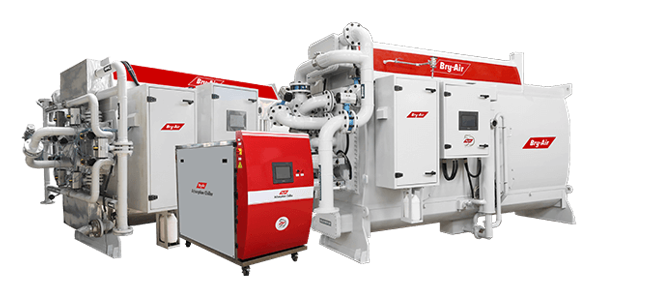
For advanced adsorption cooling technologies and expert system integration, explore the innovative solutions offered by Bry-Air. Their expertise supports efficient and environmentally responsible cooling across a wide range of applications.


Leave a Reply

Your email address will not be published. Required fields are marked *

About Me
Image Not Found

Angel Mary

Photographer u0026amp; Blogger

Hidden Hills property with mountain and city view boast nine bed rooms including

Image

Follow Me

Gallery

HST Filing in Canada – What Business Owners Need to Know
Top 7 Travel Situations Where an eSIM Beats Every Other Connectivity Option in 2026
Real estate agents in 2026 are combining agentic AI platforms like Echo-Me with smart lead magnet strategies to automate engagement, capture buyer and seller intent, and convert social followers into booked consultations without manual follow-up. This guide covers exactly how that system works and what results agents are seeing on the POP.STORE platform. Real estate has always been a relationship business, but the way those relationships begin has changed permanently. Buyers and sellers in 2026 do not call an agent cold. They research on Instagram, watch video walkthroughs on Facebook, consume market update content, and reach out through DMs and comments when something catches their attention. The agent who responds first, most personally, and most helpfully wins the relationship. The problem is that most real estate agents are either too busy with active clients to monitor social engagement consistently, or they are not set up with systems that capture lead intent when it happens rather than hours or days later when the moment has passed. The agents who are solving this problem most effectively in 2026 are using ai agent for creators built specifically for the creator economy to automate the engagement layer of their business while maintaining the authentic voice that makes real estate relationships work. POP.STORE built its Echo-Me platform to handle exactly this challenge, giving agents an always-on system that monitors comments and DMs, responds in the agent's voice, identifies high-intent leads, and routes them into a lead capture workflow without any manual intervention required from the agent. Here are the top 7 ways real estate agents are using agentic AI to generate and convert more leads in 2026. 1. Automating Comment Responses on Property Listing Posts When a real estate agent posts a new listing on Instagram or Facebook, the comment section fills up within the first few hours. Some comments are casual reactions. Others contain explicit buying signals: "What is the price?", "Is this still available?", "Can I book a viewing?", "What suburb is this in?". Every one of those comments is a potential client, and every one of them expects a response that feels personal rather than automated. Echo-Me's Social Engagement Agent monitors every comment in real time and responds within minutes in the agent's trained voice. It distinguishes between low-intent reactions and high-intent buying signals and responds to each appropriately. A comment saying "beautiful home" gets a warm, brand-consistent acknowledgment. A comment asking about price or availability triggers a response that moves the conversation toward a DM where the lead capture process begins. What this solves for real estate agents specifically: Listing posts generate lead activity at all hours including evenings and weekends when agents are unavailable High-intent comments get immediate responses during the peak engagement window rather than hours later Every response reflects the agent's actual voice and communication style rather than generic customer service language Comment response rates improve dramatically, which also improves post reach through platform algorithms that reward engagement 2. Using Comment-to-DM Flows to Capture Buyer and Seller Contact Details The real estate lead generation funnel on social media traditionally breaks at the comment stage. An interested buyer comments on a listing, the agent replies publicly, the conversation stalls in a public thread, and the lead disappears without any contact information being captured. This pattern repeats hundreds of times for active agents without producing the qualified leads the content investment deserves. The Comment-to-DM Agent inside Echo-Me changes this pattern entirely. When a buying or selling intent signal appears in a comment, the agent automatically transitions the conversation to a private DM where a structured lead qualification flow begins. The DM sequence gathers the prospective buyer's or seller's key information including timeline, budget range, location preferences, and contact details, then routes this information into the agent's CRM or follow-up system. For a real estate agent posting three to five times per week across Instagram and Facebook, this single capability can generate 15 to 30 qualified lead conversations per month from content that was previously generating engagement but no measurable pipeline activity. 3. Building Lead Magnets That Work Around the Clock Through POP.STORE Lead magnets in real estate have traditionally meant downloadable PDFs distributed through email list landing pages. A neighborhood guide, a first-time buyer checklist, a seller's preparation guide, a local market report. These assets have genuine value for prospective clients, but the traditional distribution model requires the interested person to find the landing page, enter their email, wait for the download, and hope the agent follows up at the right time. POP.STORE changes the distribution model by making lead magnet delivery instant, social-native, and connected to an automated follow-up sequence. An agent posts about a free neighborhood guide, a follower comments asking for it, and the Comment-to-DM flow delivers the resource directly in the DM along with a light qualification sequence that identifies the follower's buying or selling timeline. The lead magnet becomes the opening of a conversation rather than a one-way content transaction. Effective real estate lead magnets distributed through POP.STORE in 2026: Suburb market reports showing recent sale prices and days on market First-time buyer step-by-step guides covering the purchase process Seller preparation checklists covering presentation, pricing, and timing Investment property yield calculators for property investor audiences Mortgage readiness assessment guides for pre-approval stage buyers Relocation guides for buyers moving from other cities or countries 4. Identifying High-Intent Followers Before They Explicitly Reach Out Most real estate agents wait for a prospective client to make the first move, sending a DM or filling out a contact form, before initiating any direct engagement. This passive approach misses a significant category of potential clients who are actively researching but not yet ready to identify themselves as buyers or sellers. Echo-Me tracks follower engagement depth across all content over time, identifying individuals who consistently watch listing videos, save property posts, revisit market update content, and engage with multiple pieces of content without ever commenting publicly. These behavior patterns are strong indicators of active property research even when the follower has not sent a single message. When Echo-Me's superfan identification system surfaces these high-engagement followers, agents can proactively create content that speaks to their likely situation, a video about the buying process for someone who has been watching listing content for six weeks, for example, or a first-time buyer guide offered to someone who consistently engages with entry-level property posts. This proactive approach converts passive researchers into active leads weeks before they would have initiated contact through conventional channels. 5. Delivering Market Update Content That Generates Consistent Inbound Enquiries Market update content is one of the most consistently effective lead generation formats in real estate because it serves two purposes simultaneously. It demonstrates the agent's local expertise and market knowledge, and it attracts people who are actively considering buying or selling because those are exactly the people who want to know what the market is doing. The challenge most agents face with market update content is consistency. Producing a weekly or fortnightly market update across multiple suburb areas requires research, writing, design, and distribution, a workload that falls off quickly when active transaction periods get busy. POP.STORE's AI Creator Studio helps agents produce market update content faster by structuring the content framework, formatting the layout, and generating the visual presentation from data inputs the agent provides. An agent who previously spent three hours producing a market update can compress that to 45 minutes, making consistent content production achievable even during the busiest listing and settlement periods. 6. Converting Instagram and Facebook Followers Into Booked Consultations Follower counts mean nothing commercially unless there is a system that converts social attention into booked appointments. Most real estate agents have social followings that generate brand awareness but do not produce a measurable number of consultation bookings because the pathway from follower to booked appointment involves too many steps and too much friction. POP.STORE's calendar booking integration removes that friction entirely. An agent's POP.STORE profile can include a direct consultation booking link that connects to their calendar availability, allowing interested followers to book a buyer consultation or seller appraisal appointment in one step from a DM conversation, a bio link, or a story call to action. When this booking link is integrated into Echo-Me's DM flows, the pathway from comment to booked consultation becomes fully automated. A follower who comments on a property post, is moved to DM by the Comment-to-DM Agent, goes through a brief qualification sequence, and expresses readiness to speak with the agent can be presented with a direct calendar booking link within minutes of their initial comment, without the agent ever needing to personally intervene in the conversation. 7. Using Deal Monitoring to Capture Brand and Partnership Opportunities Real estate agents who build significant social followings often attract inbound opportunities beyond direct client leads: mortgage broker partnership proposals, property management referral arrangements, home staging collaboration offers, and local business sponsorship enquiries. These commercial messages arrive in DMs and comments alongside client enquiries and frequently get missed during busy periods when the inbox is not being monitored systematically. Echo-Me's Deal Monitoring Agent scans every incoming DM and comment for partnership and commercial signals, scores them by potential value and urgency, and sends smart alerts so agents only need to review opportunities that genuinely merit attention. This capability is particularly valuable for agents who are building their personal brand alongside their transaction business, where commercial relationships with complementary service providers can generate referral revenue streams that compound over time. Smart real estate lead magnets paired with agentic AI systems on POP.STORE create a lead generation engine that does not depend on the agent being available at every moment. The system captures intent, qualifies prospects, delivers value, and books appointments around the clock, so the agent's personal time and energy goes toward the consultations and negotiations where their expertise genuinely makes the difference. Frequently Asked Questions How does Echo-Me respond to real estate enquiries in an agent's specific voice? Echo-Me trains on the agent's existing content, past DM responses, and brand communication style before generating any replies. The training process calibrates response tone, vocabulary, and personality to match the individual agent rather than using a generic template. Agents can review and adjust voice calibration settings at any time. What types of real estate content generate the most lead activity through POP.STORE? Property listing posts with clear visual presentation generate the highest comment volume. Market update content attracts the most qualified leads because it draws active buyers and sellers who are researching current conditions. Lead magnet offers distributed through comment-to-DM flows consistently produce the highest contact information capture rate. Can a real estate agent manage multiple suburb markets and listing types through one POP.STORE account? Yes. POP.STORE supports multiple digital products, lead magnets, and content categories under a single account. An agent covering residential, investment, and commercial property across multiple suburbs can organize separate content streams and lead capture flows for each without requiring multiple accounts. Does using automated DM responses violate Instagram or Facebook terms of use? Echo-Me operates within the published terms of service for both platforms. It responds to genuine inbound interactions rather than initiating mass outreach, uses human-like response timing, and only engages during creator-defined operating hours. This approach is consistent with how both platforms distinguish between legitimate engagement tools and policy-violating automation. How quickly do real estate agents typically see lead generation results after setting up Echo-Me? Agents who activate the Comment-to-DM flow typically see measurable lead capture activity within the first two to four weeks as the system begins converting comment engagement that was previously generating no pipeline activity. Agents with existing engaged followings of 5,000 or more often see qualified lead conversations begin within the first week of activation. What is the difference between a lead magnet and a digital product on POP.STORE for real estate agents? A lead magnet is a free resource offered in exchange for contact information and engagement, such as a suburb guide or buyer checklist. A digital product is a paid resource sold directly through the POP.STORE storefront, such as an in-depth investment property analysis course or a comprehensive relocation guide. Both can be created and distributed through the same platform.
Building with Confidence: How Timber Structures Support Durable and Modern Homes
Choosing the Right Business Dispute Lawyer in Sydney
Understanding Estate Planning with Wills and Estate Lawyers in Campbelltown
Future of Online Exams in the US: Key Trends
NAEGELI Deposition & Trial
How Outsourcing for Insurance Companies Drives Efficiency and Growth
Advanced Adsorption Chiller Systems for Cooling - greennewsdesk