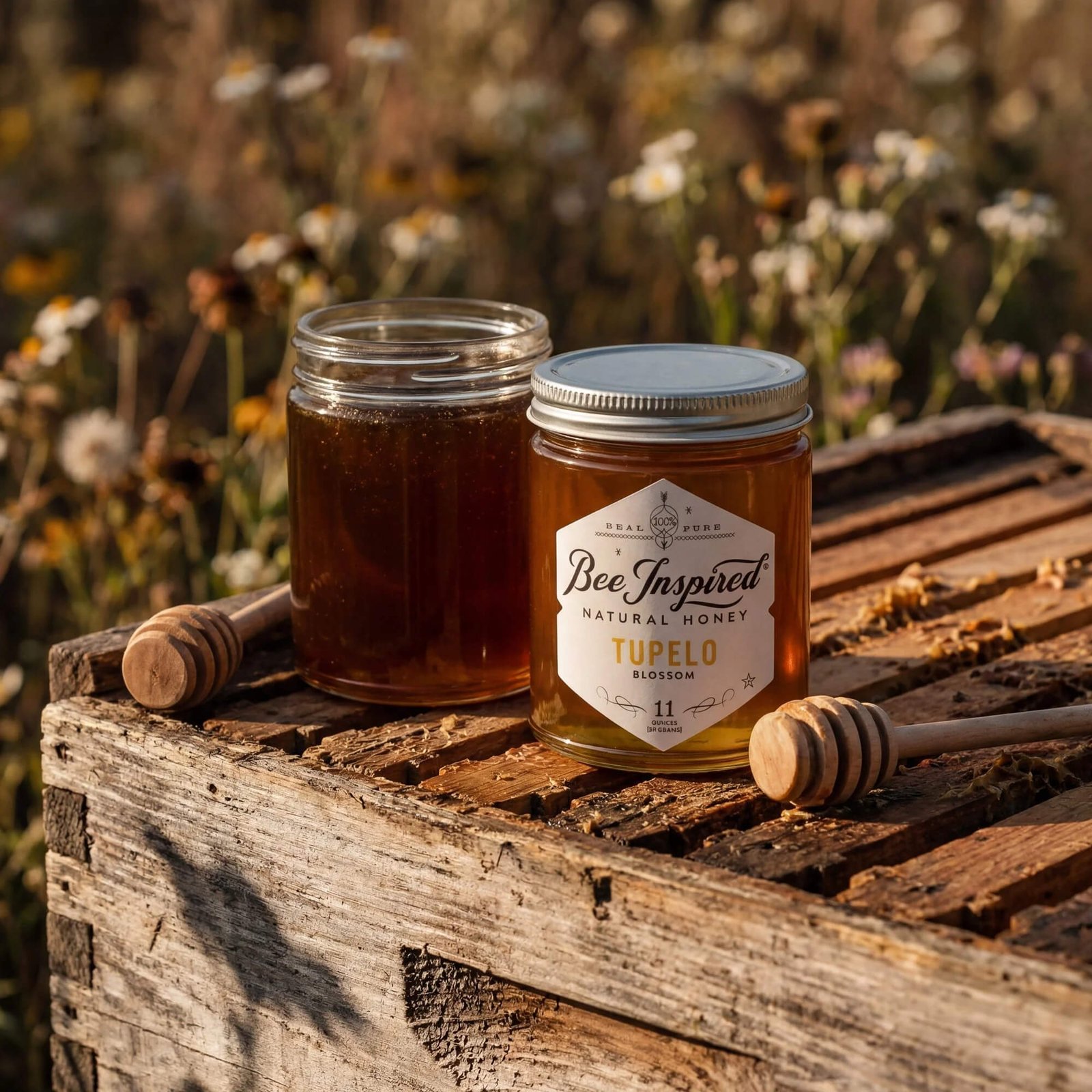
Tupelo honey has a reputation that few other honeys match, along with a price that reflects its short bloom and small growing region. Many first-time buyers wonder whether the flavor will justify the attention or simply taste like a pricier version of the honey already in the pantry.
For most first-time tasters, the flavor turns out to be softer and more refined than expected. Raw Tupelo honey tastes mild, buttery, and gently floral, with soft fruit notes and a clean finish that fades without lingering heaviness. Knowing what to expect on that first spoonful makes the experience easier to appreciate and helps buyers recognize the real thing.
What Does Tupelo Honey Taste Like?
Tupelo honey tastes mild, buttery, and gently floral, with soft notes of pear, vanilla, and light spice. The sweetness is smooth rather than sharp, the texture feels silky on the tongue, and the finish fades cleanly without the heavy aftertaste of darker honeys.
The main traits first-time tasters notice include:
- Buttery, silky texture
- Gentle floral sweetness
- Soft fruit notes
- Light vanilla or spice
- Mild, balanced sweetness
- Clean, quick finish
The First Taste, Moment by Moment
Tupelo reveals its flavor in stages rather than all at once. Paying attention to the texture, the middle flavors, and the finish gives a fuller picture of the honey on the first try.
The First Impression on the Tongue
Texture usually comes before flavor. Tupelo feels smooth and silky, coating the tongue without the thick, sticky pull of many store-bought honeys. Sugar balance contributes to this feel, since most honey contains about 38% fructose while tupelo is 43-44%.
The Flavor That Follows
Once the honey warms on the tongue, a mild buttery sweetness takes over. Floral notes come next, followed by gentle fruit tones that many tasters compare to ripe pear. The flavor builds slowly and stays balanced instead of sharp or sugary.
The Finish
Tupelo ends lightly, with the floral sweetness fading cleanly after swallowing. Little of the heavy or bitter aftertaste found in darker varieties remains on the palate. Many first-time tasters reach for a second spoonful simply to catch the notes they missed on the first.
Flavor Notes People Pick Up in Tupelo
Tasting notes vary from person to person, and the same jar can reveal different flavors to different palates. These are the notes tasters mention most often:
- Pear and Stone Fruit: Soft fruit tones resembling ripe pear, peach, or apricot give Tupelo a gentle, rounded sweetness.
- Cinnamon and Light Spice: Some tasters notice a faint warm spice on the first touch, especially when the honey is at room temperature.
- Vanilla: Subtle vanilla notes add to the smooth, buttery character and soften the overall sweetness.
- Rosewater and Jasmine: Delicate floral tones come from the white tupelo blossom and give the honey a refined aroma.
- Cotton Candy Sweetness: The light, airy sweetness reminds some people of cotton candy or bubblegum without tasting artificial.
First-time tasters may notice only two or three of these notes. Repeated tastings often bring out more as the palate becomes familiar with the honey.
Why Tupelo Tastes So Different From Other Honey
Tupelo’s flavor comes from three factors working together: the floral source, the sugar balance, and the natural aroma compounds in the nectar. The sections below cover each one.
The White Tupelo Blossom
Tupelo honey comes from the nectar of White Tupelo trees, which grow along river swamps in Northwest Florida and South Georgia. The trees bloom for only a few weeks in spring, and beekeepers time the harvest carefully to keep other nectars out. That focused source gives the honey its consistent, distinctive character.
Sugar Balance
Higher fructose gives Tupelo a smoother, softer sweetness than many honeys. Glucose is the sugar that crystallizes, and Tupelo’s lower share keeps the honey liquid and pourable for a long time. That steady liquid state also helps preserve the silky mouthfeel well after the jar is opened.
Aroma Compounds in the Nectar
Tupelo’s aroma comes from a mix of natural compounds that shape its flavor. Vanillin adds soft vanilla notes, while (E)-β-damascenone, a compound with a cooked-apple scent, ranks among the strongest aroma compounds in Tupelo honey. That strong presence explains the gentle fruit notes many tasters pick up.
How Tupelo Compares With Familiar Honeys
Comparing Tupelo with honeys most people already know makes its character easier to picture. These comparisons cover four common varieties.
Tupelo vs Clover Honey
Clover honey is mild and simply sweet, which makes it a familiar everyday choice. Tupelo shares that mildness but adds buttery depth, floral notes, and soft fruit tones that clover lacks. Clover also crystallizes much sooner.
Tupelo vs Wildflower Honey
Wildflower honey changes with the season and the flowers in bloom, and its flavor can range from light to bold. Tupelo offers a more consistent profile because it comes mainly from one floral source. Buyers who want a predictable, delicate flavor often prefer Tupelo.
Tupelo vs Orange Blossom Honey
Orange blossom honey carries bright citrus and floral notes with a slightly sharper sweetness. Tupelo is softer and rounder, with buttery and pear-like tones instead of citrus. Both work well in tea, though Tupelo blends in more gently.
Tupelo vs Buckwheat Honey
Buckwheat honey is dark, earthy, and malty, with a strong molasses-like finish. Tupelo contrasts with buckwheat in nearly all respects, offering a light color, a delicate flavor, and a clean finish. Tasting the two side by side shows the wide range of flavors honey can offer.
How to Taste Tupelo Honey for the First Time
Tasting Tupelo plain brings out the most flavor. Follow these steps for the first try:
- Bring the honey to room temperature. Cold honey dulls flavor, while a room-temperature jar releases more aroma.
- Use a clean spoon. Metal or wooden spoons both work, as long as no other flavors linger on them.
- Taste a small amount plain. Place about half a teaspoon on the tongue and let the honey melt slowly.
- Notice the texture first. Pay attention to the silky feel before focusing on flavor.
- Wait for the finish. Breathe gently after swallowing to catch the floral and fruit notes.
- Sip water between tastes. Plain water resets the palate before the next spoonful.
- Compare with a familiar honey. Tasting a known variety alongside Tupelo highlights the contrast.
Why Your Tupelo May Taste Different Than Expected
First tastes do not always match the descriptions, and several factors can change the flavor. These are the most common reasons:
- Blended Honey: Tupelo mixed with other honeys can taste heavier or less floral. Raw Tupelo honey labeled clearly with White Tupelo as the floral source offers the truest version of the flavor.
- Heat During Processing: Heavy heating can flatten delicate floral notes. Raw honey that has only been strained keeps more of the original aroma.
- Harvest Variation: Weather and bloom conditions change slightly from year to year, and a new harvest may taste a little brighter or softer than the last.
- Storage Conditions: Honey kept near heat or sunlight can lose aroma over time. A cool, dark cupboard protects the flavor best.
- Tasting Cold or With Strong Foods: Refrigerated honey tastes muted, and bold foods such as dark coffee or spicy dishes can hide Tupelo’s delicate notes.
Best Ways to Enjoy Tupelo on the First Try
Simple pairings let Tupelo’s mild flavor come through clearly. Good options for a first try include:
- Plain from a spoon
- Warm biscuits or toast
- Plain Greek yogurt
- Mild cheeses like brie or goat cheese
- Fresh pears or apples
- Green, white, or chamomile tea
Gentle warmth is fine, but high heat can dull the floral notes. Adding Tupelo at the end of cooking, or after a drink has cooled slightly, keeps more of the flavor intact.
Is Tupelo Honey Worth Trying?
Tupelo is worth trying for anyone who enjoys mild, smooth honey with layered flavor. The buttery texture and clean finish make the honey easy to enjoy plain, and the floral notes add quiet richness to tea, breakfast, and cheese boards.
Buyers who prefer strong, dark honey may find Tupelo too delicate at first. Even then, a side-by-side tasting shows why this honey has earned its reputation. Choosing raw Tupelo honey over heavily processed jars gives the truest version of that flavor.
Important FAQs
Is Tupelo honey sweeter than regular honey?
Yes, Tupelo honey can taste slightly sweeter because of its higher fructose content. The sweetness feels smooth and rounded rather than sharp, and the buttery texture and floral notes keep the flavor balanced instead of sugary.
Does Tupelo honey taste like butter?
No, Tupelo honey does not taste like butter, but many people describe the texture and flavor as buttery. The honey feels silky and rich on the tongue, with a soft, smooth sweetness that resembles a light butter note.
Bottom Line
The first taste of raw Tupelo honey is usually gentler than people expect. Silky texture comes first, followed by buttery sweetness, soft floral and fruit notes, and a finish that fades cleanly. Tasting the honey plain and at room temperature gives the clearest view of those qualities.
Simple pairings and a side-by-side comparison with a familiar honey make the experience even more rewarding. Once the flavor becomes familiar, Tupelo often turns into the jar people reach for first.
Smiley Honey harvests Tupelo from its home in Wewahitchka, Florida, close to the river swamps where white tupelo trees bloom in spring. The Tupelo is OK Kosher certified and carries the Fresh From Florida label, and the range also includes the Premium Tupelo Honey for those ready to explore further. Visit smileyhoney.com to choose a first jar, or call the team for help picking the right size.
Read More: https://quickremedynow.com/does-organic-honeycomb-taste-any-different/